The International Turkic Academy is an intergovernmental organization (based in Astana, Kazakhstan) founded under the aegis of the Organization of Turkic States (OTS). The Organization is dedicated to comprehensive cooperation among the Turkic-speaking nations. Its Member States are Azerbaijan, Kazakhstan, Kyrgyzstan, Türkiye, Uzbekistan; its Observer States are Hungary, Turkmenistan, Turkish Republic of Northern Cyprus. The Academy conducts multidisciplinary research and publishing projects covering history, archeology, ethnography, languages and literature, architectural heritage and cultural interactions between peoples over the vast historical geography of the Turkic world from Mongolia in the East to the Balkans in the West.
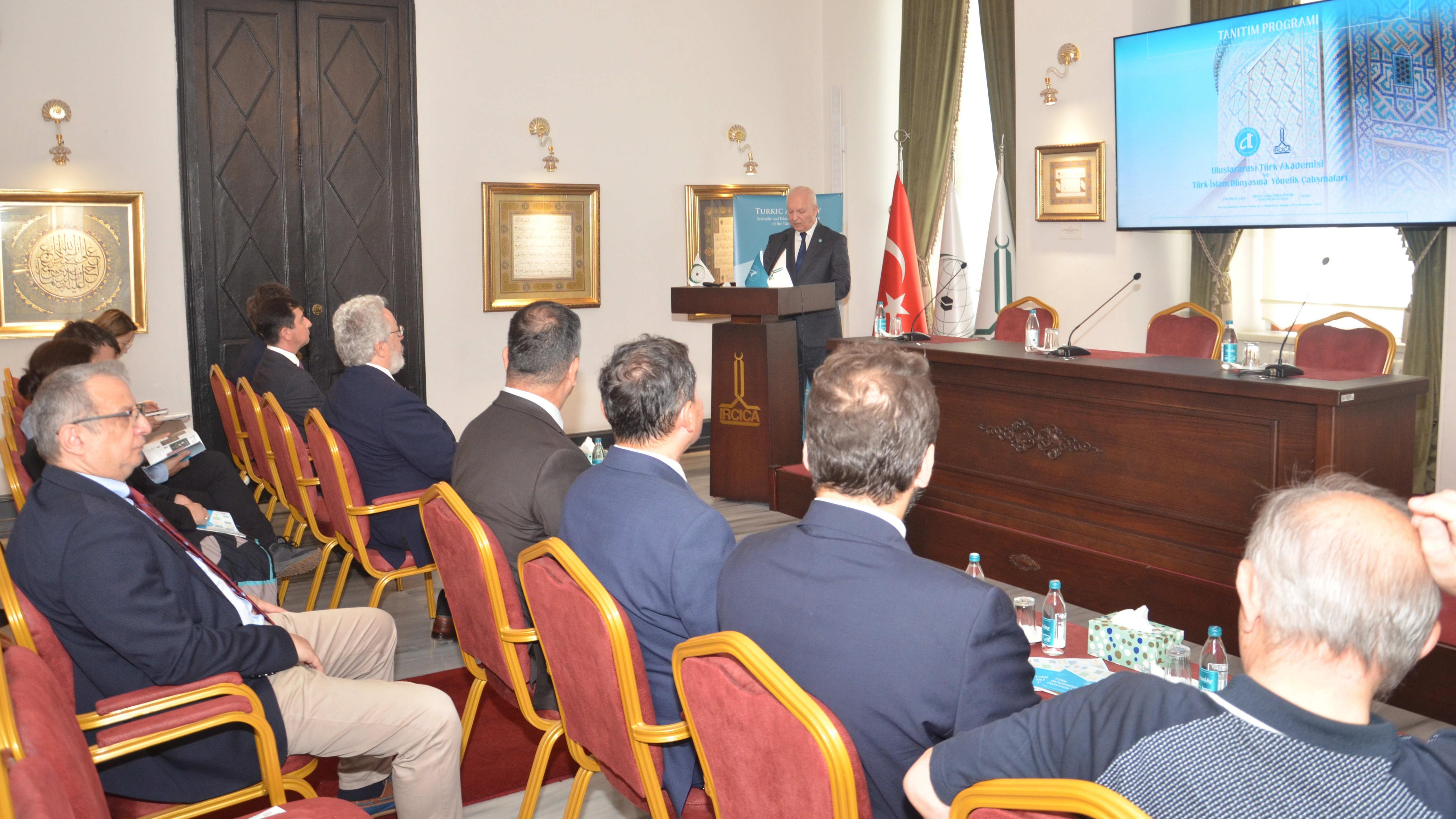
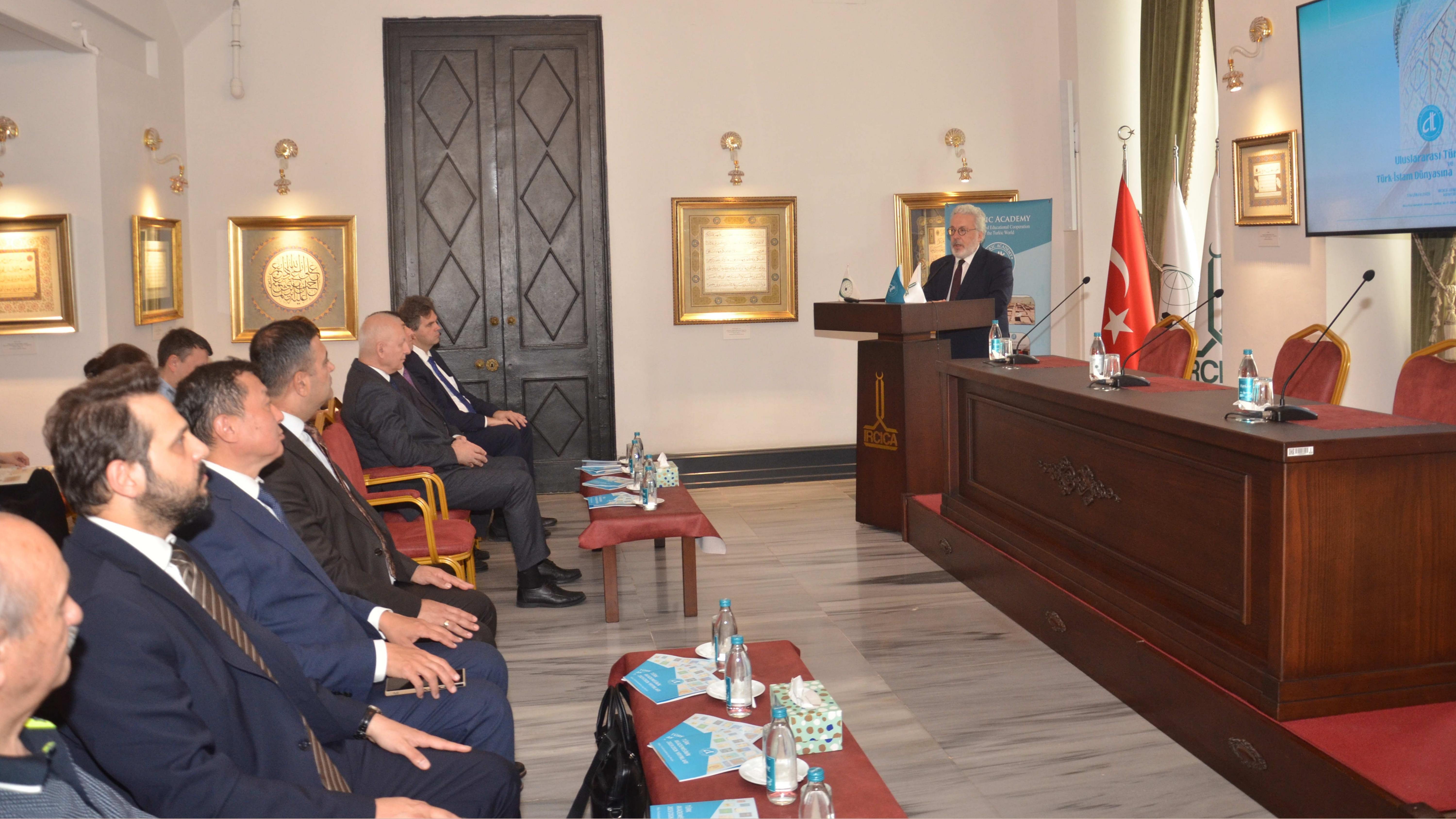
A cultural-diplomatic meeting was organized by the International Turkic Academy with IRCICA’s collaboration, on 5 June 2026 at IRCICA’s conference hall, to introduce the research projects and publications of the International Turkic Academy to the world of learning. The event also marked the centenary of the First Turcology Congress, which was held in February-March 1926 in Baku, with the principal objective of standardizing the various Latin-Based alphabets used by the Soviet Turkic states.
The meeting was opened by Prof. Dr. Mahmud Erol Kılıç, Director General of IRCICA, describing the close link between the OIC and its cultural subsidiary IRCICA on one hand, and on the other, the OTS and its Academy. The Member States of the OTS included in the OIC membership are playing an important cultural role within the OIC, and the Academy and IRCICA are sister organizations.
In his address, Prof. Dr. Shahin Mustafayev, President of the International Turkic Academy, said that the significance of this meeting introducing the Academy’s projects and publications also underlines the common historical and cultural values shared by the Turkic world and the wider Muslim world. The Academy studies these cultural values and heritage with scientific methods currently under more than 50 programs, including innovative projects such as the dictionaries of technological terms and the compilations on the “sacred geography” of the Turkic world covering places and monuments. Prof. Mustafayev concluded that these studies focusing on the Turkic world and similar studies on the wider Muslim world are complementary.
This was followed by the panel, where three senior experts of the Academy introduced some of the major advanced projects of the Academy: Dr. Aynur Mayeremova, who was also the Presenter and Moderator of the meeting; Dr. Nurdin Useev, on the project to compile, study and publish the Turkic stone inscriptions throughout the vast geography which produced a series of catalogues arranged by region, constituting invaluable primary sources of historical information and products of the Turkic written culture; Dr. Dinmuhammed Ametbek, on the “sacred geography” project, which resulted in three volumes on the archeological and architectural monuments classified according to regions, and the project and resulting publication on the Oghuz-Kipchak funerary monuments in the Mangistau region which is important for Turkic history.
The meeting was held in the presence of the Consul General of Kazakhstan in Istanbul Mr. Nuriddin Amankul and his assistant Mr. Sanzhar Kuantayev; the OTS Liaison Diplomat at the Hungarian Consulate General Ambassador Péter Szántó; representatives of cultural institutions working with the Turkic states, and faculty from various universities. The publications of the International Turkic Academy, and IRCICA’s publications relating to Central Asia and Caucasia displayed on this occasion, drew great interest.